
CMMS for Textile and Garment Manufacturing: Precision Maintenance for Loom and Production Operations
Smart Maintenance Task Manager ensures every lubrication point, every tension check, and every mechanical inspection is scheduled, executed, and documented — across rapier looms, water jet looms, knitting machines, and the cutting and sewing lines downstream.
Why Maintenance Discipline Matters in Textiles & Garment
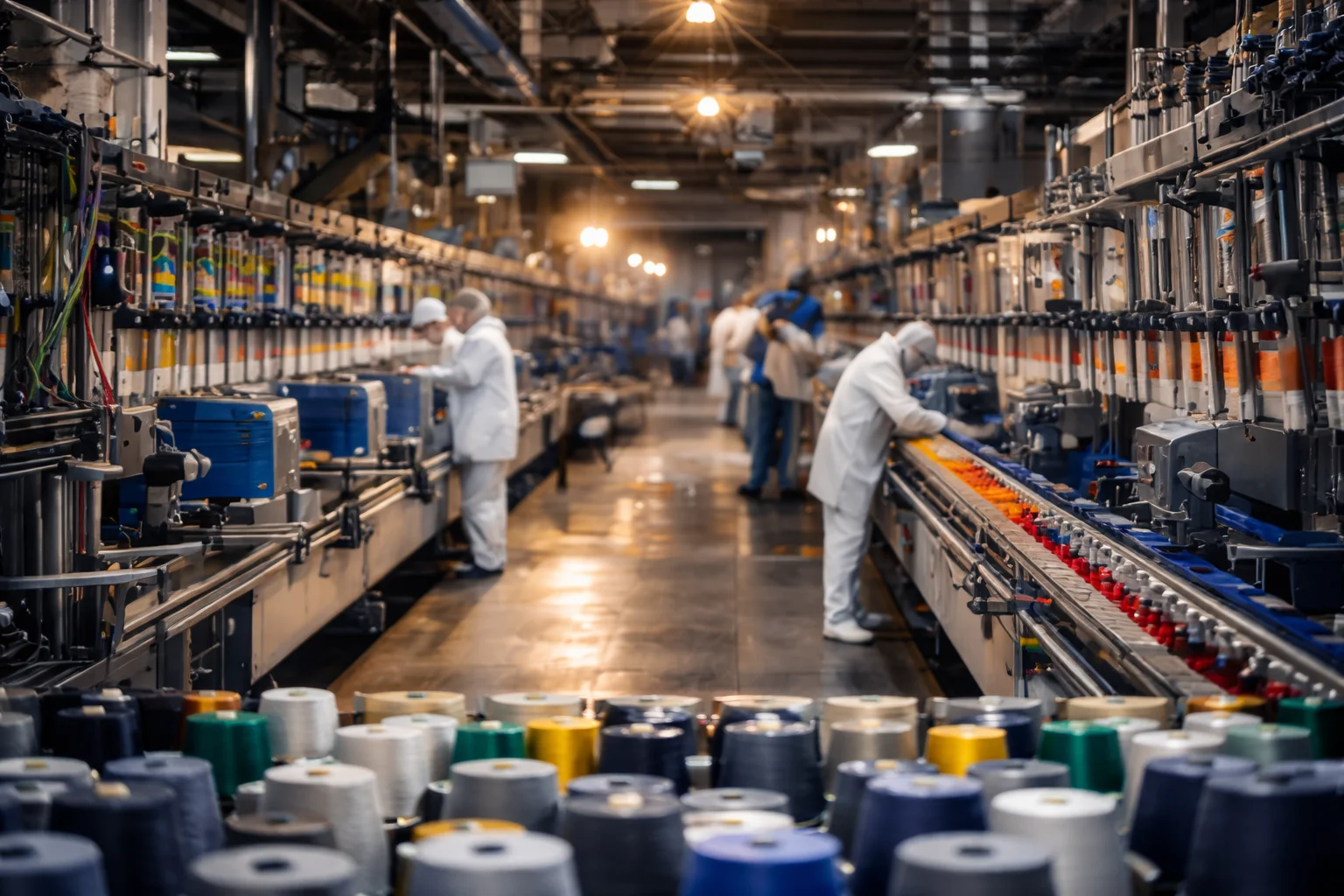
Textile machinery — looms, warping machines, winding units, cutting tables, sewing lines — requires precise, frequent lubrication and mechanical maintenance to avoid fabric defects, thread breaks, and production interruptions. In garment production, a single machine breakdown can halt an entire line and cause order delays with real financial penalties. The cost of an under-lubricated loom is rarely the lubricant; it is the rejected fabric and the missed delivery.
What Smart Maintenance Task Manager Does for Textiles & Garment Operations
- Lubrication schedules per loom and per loom section — duplicate a configured loom to set up the next one
- Tension checks and adjustments as scheduled tasks with recorded readings
- Maintenance records for rapier looms, water jet looms, knitting machines
- NFC tags on machines, so technicians open the right machine with a tap
- A complete, timestamped record of who did each task
- Alerts when a recorded reading is outside its limits
How it runs in your facility
In a Textiles & Garment facility, Smart Maintenance Task Manager runs on two layers: a web dashboard for the maintenance manager and supervisors, and a mobile app on iOS/Android tablets and phones for the technicians on the floor.
NFC tags or QR labels on machines and task points let technicians open the right tasks with a tap or a scan — no typing, no searching. Technicians can work through their tasks, readings and photos even when the production area has no Wi-Fi, and the app syncs to the central dashboard the moment the device reconnects.
Setup typically takes about 2–3 weeks for a site with around 100 assets. Multi-site rollouts scale from the same configuration.
Textiles & Garment Questions
Other Industries
Smart Maintenance Task Manager is the same product in every industry — the maintenance workflows differ, the platform does not.
Your facility. Your workflows. Book a 30-minute demo.
We will show you how Smart Maintenance Task Manager fits the specific maintenance pattern of a Textiles & Garment facility your size, with no commitment.
Book a Free Demo →