
CMMS for Textile and Garment Manufacturing: Precision Maintenance for Loom and Production Operations
Smart Maintenance Task Manager ensures every lubrication point, every tension check, and every mechanical inspection is scheduled, executed, and documented — across rapier looms, water jet looms, knitting machines, and the cutting and sewing lines downstream.
Why Maintenance Discipline Matters in Textiles & Garment
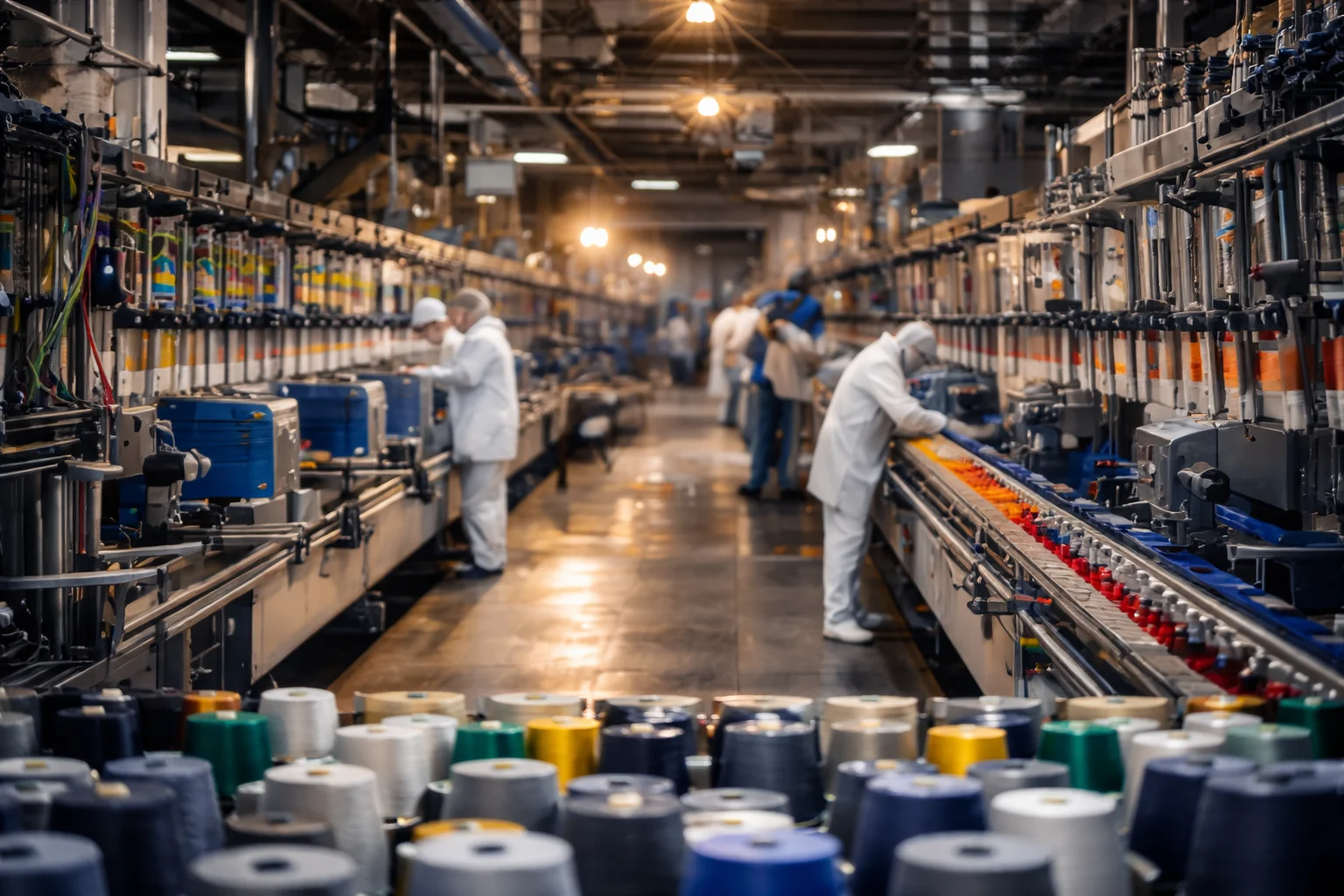
Textile machinery — looms, warping machines, winding units, cutting tables, sewing lines — requires precise, frequent lubrication and mechanical maintenance to avoid fabric defects, thread breaks, and production interruptions. In garment production, a single machine breakdown can halt an entire line and cause order delays with real financial penalties. The cost of an under-lubricated loom is rarely the lubricant; it is the rejected fabric and the missed delivery.
What Smart Maintenance Task Manager Does for Textiles & Garment Operations
- Lubrication schedules per loom and per loom section — duplicate a configured loom to set up the next one
- Tension checks and adjustments as scheduled tasks with recorded readings
- Maintenance records for rapier looms, water jet looms, knitting machines
- NFC tags on machines, so technicians open the right machine with a tap
- A complete, timestamped record of who did each task
- Alerts when a recorded reading is outside its limits
How it runs in your facility
In a Textiles & Garment facility, Smart Maintenance Task Manager runs on two layers: a web dashboard for the maintenance manager and supervisors, and a mobile app on iOS/Android tablets and phones for the technicians on the floor.
NFC tags or QR labels on machines and task points let technicians open the right tasks with a tap or a scan — no typing, no searching. Technicians can work through their tasks, readings and photos even when the production area has no Wi-Fi, and the app syncs to the central dashboard the moment the device reconnects.
Setup typically takes about 2–3 weeks for a site with around 100 assets. Multi-site rollouts scale from the same configuration.
From Paper Lubrication Sheets to 94% On-Shift Completion in a 400-Loom Weaving Facility
Textile manufacturer · 380 employees · 400 rapier looms · 12 technicians
Illustrative scenario, composed from common maintenance challenges. Company size, roles and figures are representative, not from an identified customer.
The Situation
A garment manufacturer operates 400 rapier looms across 4 weaving halls. Lubrication maintenance is critical — an under-lubricated loom causes thread breaks, weft defects, and fabric rejects that cost more than the lubricant itself. The facility runs 2 shifts per day, 6 days a week.
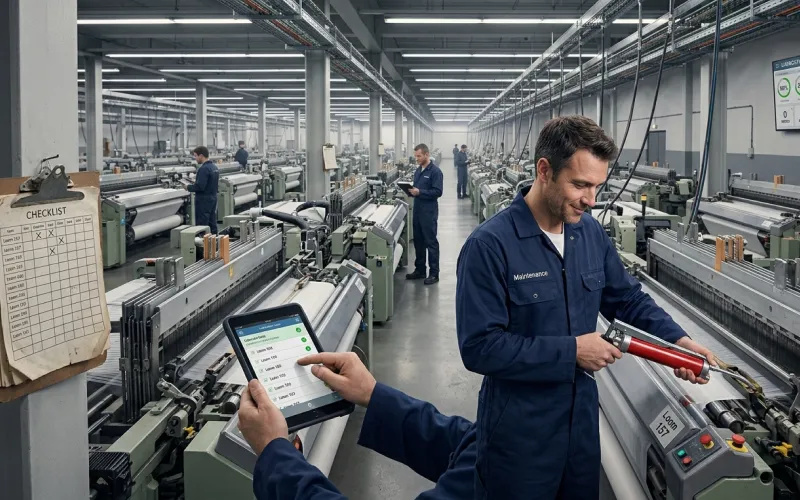
“We had a paper system — a printed checklist for each hall, attached to a clipboard near the entrance. Technicians were supposed to sign off each loom row every day. But when we audited the sheets, we found that on average 40% of the rows were either not signed or signed as complete when they hadn’t been done. We had no way to know.”
Specific Problems
- No way to verify if a lubrication task was actually completed or just signed off
- No record of which lubricant product was used or in what quantity
- Night shift had a different paper form — records were never combined
- Supervisors couldn’t see which technicians were completing work and which weren’t
How It Would Work
Setup
- 400 looms entered as assets under 4 production sites (weaving halls)
- Each loom has 6–12 task points (crankshaft, beam, warp stop, etc.)
- NFC tags on each loom’s lubrication points
- Lubrication tasks scheduled for each shift (several visits a day, available on request), assigned per technician by line
Daily Workflow (Technician)
Supervisor View
- Dashboard shows live completion percentage by weaving hall
- Overdue work shows on the dashboard right away; the assigned technician gets a daily overdue reminder, and optional escalation alerts the supervisor after the hours you set
- Shift results are on the dashboard; any report exports to CSV in one click
Offline Capability
The facility has poor WiFi coverage between loom rows. Technicians work offline; the tablet syncs each time they pass near the hall entrance where the router is located.
The Result
Illustrative scenario based on common industry challenges.
Textiles & Garment Questions
Other Industries
Smart Maintenance Task Manager is the same product in every industry — the maintenance workflows differ, the platform does not.
Your facility. Your workflows. Book a 30-minute demo.
We will show you how Smart Maintenance Task Manager fits the specific maintenance pattern of a Textiles & Garment facility your size, with no commitment.
Book a Free Demo →