
CMMS for Mining: Usage-Based Maintenance for Mobile Fleets and Fixed Plant
Smart Maintenance Task Manager gives mine maintenance teams per-unit control of a mobile fleet — every haul truck, excavator, loader, and drill is its own asset carrying its own hour, kilometre, and tonnage meters, with service intervals that fire when the counter says so, not when the calendar does.
Why Maintenance Discipline Matters in Mining
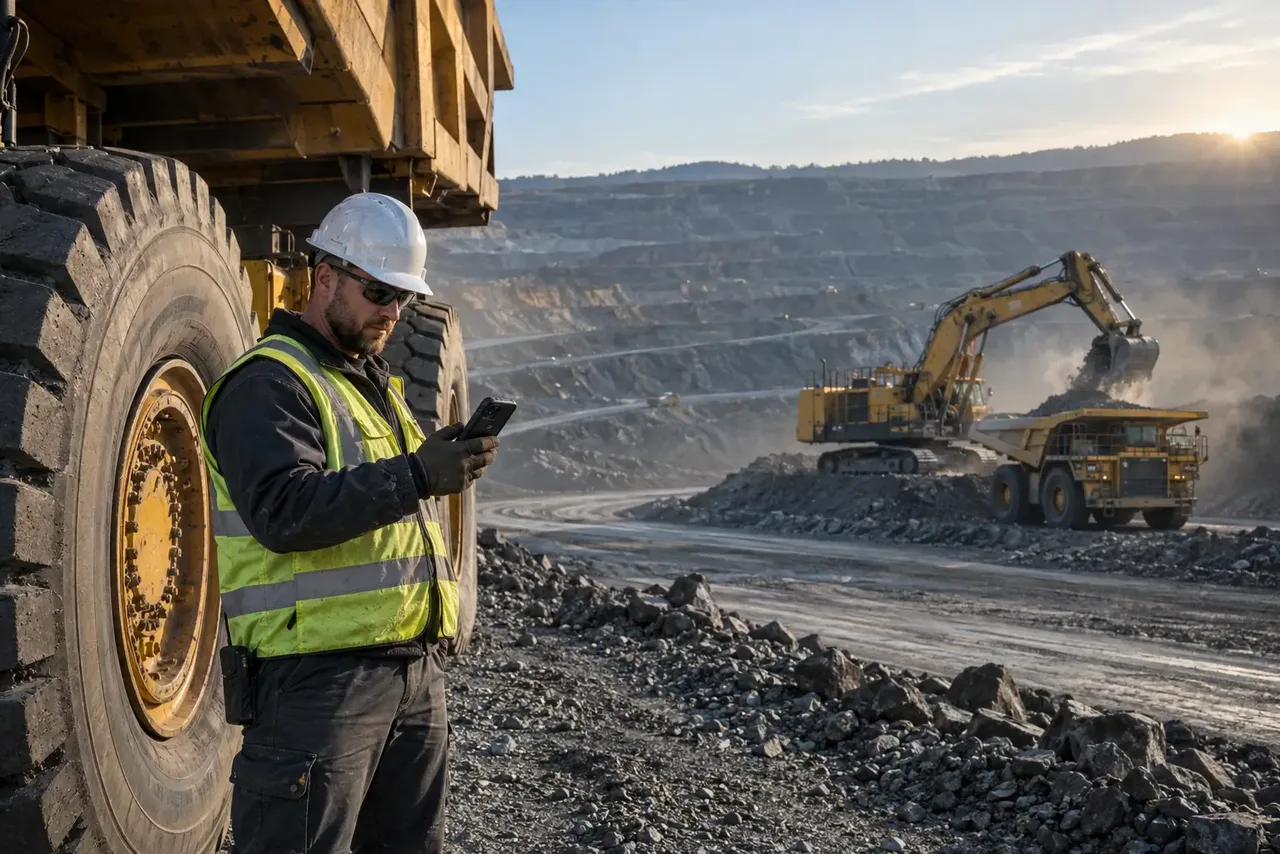
Mining equipment does not wear by the calendar. A haul truck that ran 400 hours this month needs service sooner than one that ran 150, and a fleet-wide average hides exactly the unit that is about to fail. Smart Maintenance Task Manager models every machine as its own asset with its own meters, so service intervals follow actual use, planners see a projected next-due date for every unit computed from how fast it is really running, and a counter that has not been read for too long is flagged before it can mislead a schedule. Readings are recorded on the phone at the machine, with no signal, and sync when the crew is back in range.
What Smart Maintenance Task Manager Does for Mining Operations
- Per-unit asset register for haul trucks, excavators, loaders, drills, dozers, and graders
- Service intervals by running hours, kilometres, or tonnage — with staggered rules per unit
- Meter readings recorded in the field, offline, during any task on the machine
- Projected next-due date for every rule, computed from actual usage rate
- Reading reminders when no scheduled visit would naturally capture the counter
- Lockout enforcement before hazardous tasks, with a complete audit trail
Every completed task carries the technician's identity, timestamps, photo evidence, and any readings taken, and the full per-unit history exports for audit. Lockout procedures are enforced as a gate on the phone before a task can begin — the technician cannot skip the safety steps and proceed.
Common deployment shape
A typical Mining facility runs Smart Maintenance Task Manager across two layers: a web dashboard for the maintenance manager and supervisors, and a mobile app on iOS/Android tablets and phones for the technicians on the floor.
NFC tags or QR labels are applied to machines so technicians can open a machine's task list with a single tap — no typing, no searching. The mobile app is offline-first, so it keeps working even when the production area has no Wi-Fi, and syncs to the central dashboard the moment the device reconnects.
Setup for a single site of roughly 100 assets typically lands in 2-3 weeks. Multi-site rollouts scale from the same configuration.
Mining Questions
Other Industries We Serve
Smart Maintenance Task Manager is the same product in every industry — the maintenance workflows differ, the platform does not.
Your facility. Your workflows. Book a 30-minute demo.
We will show you how Smart Maintenance Task Manager fits the specific maintenance pattern of a Mining facility your size, with no commitment.
Book a Free Demo →