
CMMS for Automotive Assembly: Keep Assembly Lines Running at Full Capacity
Smart Maintenance Task Manager gives automotive maintenance teams the structure to keep scheduled work from slipping and the records to show what was done — covering robotic welding cells, conveyor systems, hydraulic presses, and CNC machining centers.
Why Maintenance Discipline Matters in Automotive
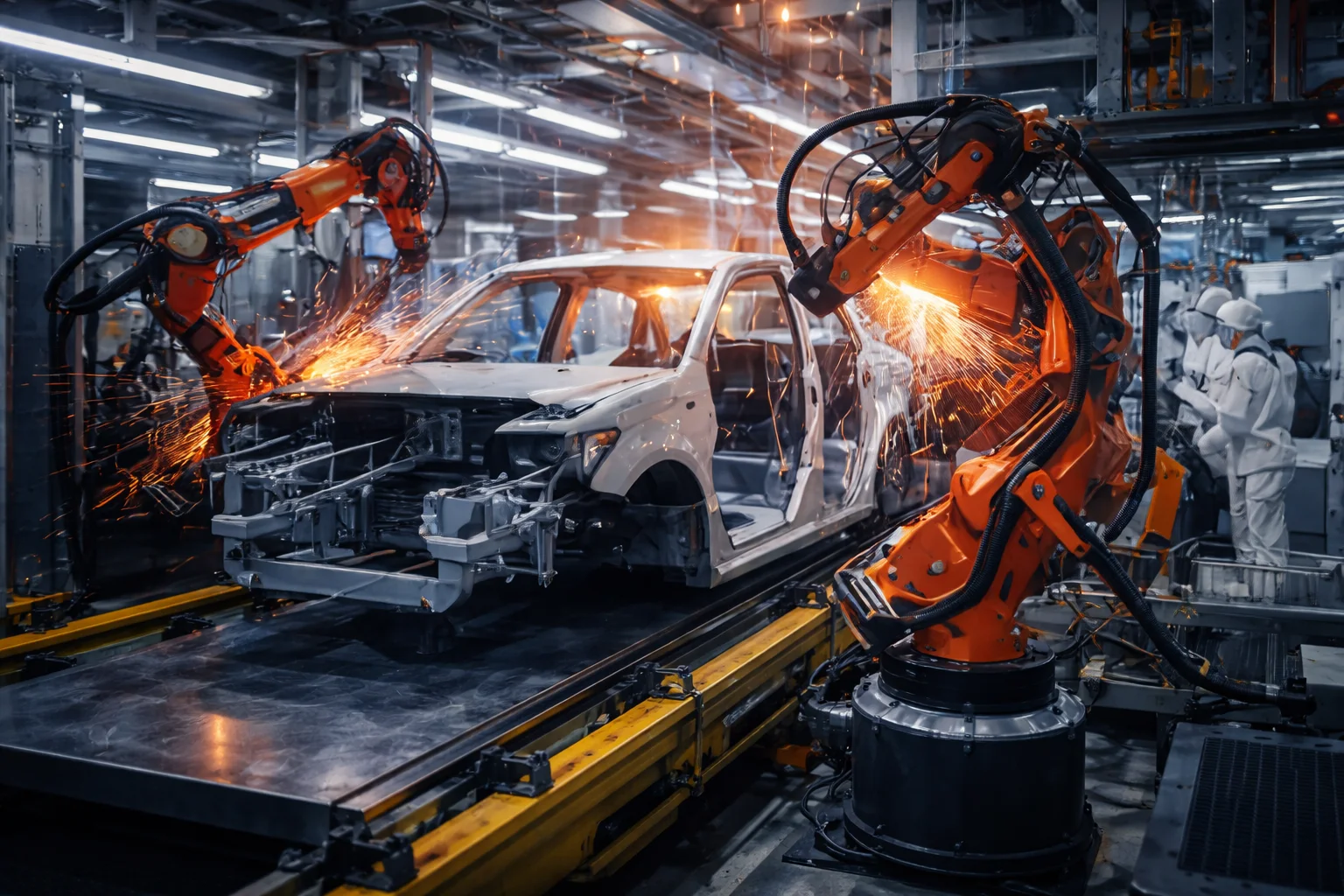
Automotive assembly lines operate at high speed with narrow tolerances. Robotic welding cells, conveyor systems, hydraulic presses, and CNC machining centers all require strict maintenance intervals to maintain quality and output. Missed maintenance on even one piece of equipment can cascade to a full line stoppage — the cost of which is measured in produced vehicles per hour, not in repair labour.
What Smart Maintenance Task Manager Does for Automotive Operations
- Preventive maintenance schedules for robotic systems and conveyors
- Hydraulic and pneumatic system inspection tracking
- Tool change and calibration scheduling
- Repair requests raised from the phone with a photo, then triaged by supervisors: fix now, defer to the next shutdown, or dismiss
- Maintenance Effectiveness Index (MEI) per line/asset for objective program tracking
- Optional multi-technician assignment — your Admin switches it on
How it runs in your facility
In a Automotive facility, Smart Maintenance Task Manager runs on two layers: a web dashboard for the maintenance manager and supervisors, and a mobile app on iOS/Android tablets and phones for the technicians on the floor.
NFC tags or QR labels on machines and task points let technicians open the right tasks with a tap or a scan — no typing, no searching. Technicians can work through their tasks, readings and photos even when the production area has no Wi-Fi, and the app syncs to the central dashboard the moment the device reconnects.
Setup typically takes about 2–3 weeks for a site with around 100 assets. Multi-site rollouts scale from the same configuration.
Automotive Questions
Other Industries
Smart Maintenance Task Manager is the same product in every industry — the maintenance workflows differ, the platform does not.
Your facility. Your workflows. Book a 30-minute demo.
We will show you how Smart Maintenance Task Manager fits the specific maintenance pattern of a Automotive facility your size, with no commitment.
Book a Free Demo →